


JetCat Fuel System Planning: Tanks, Couplings and Refuelling

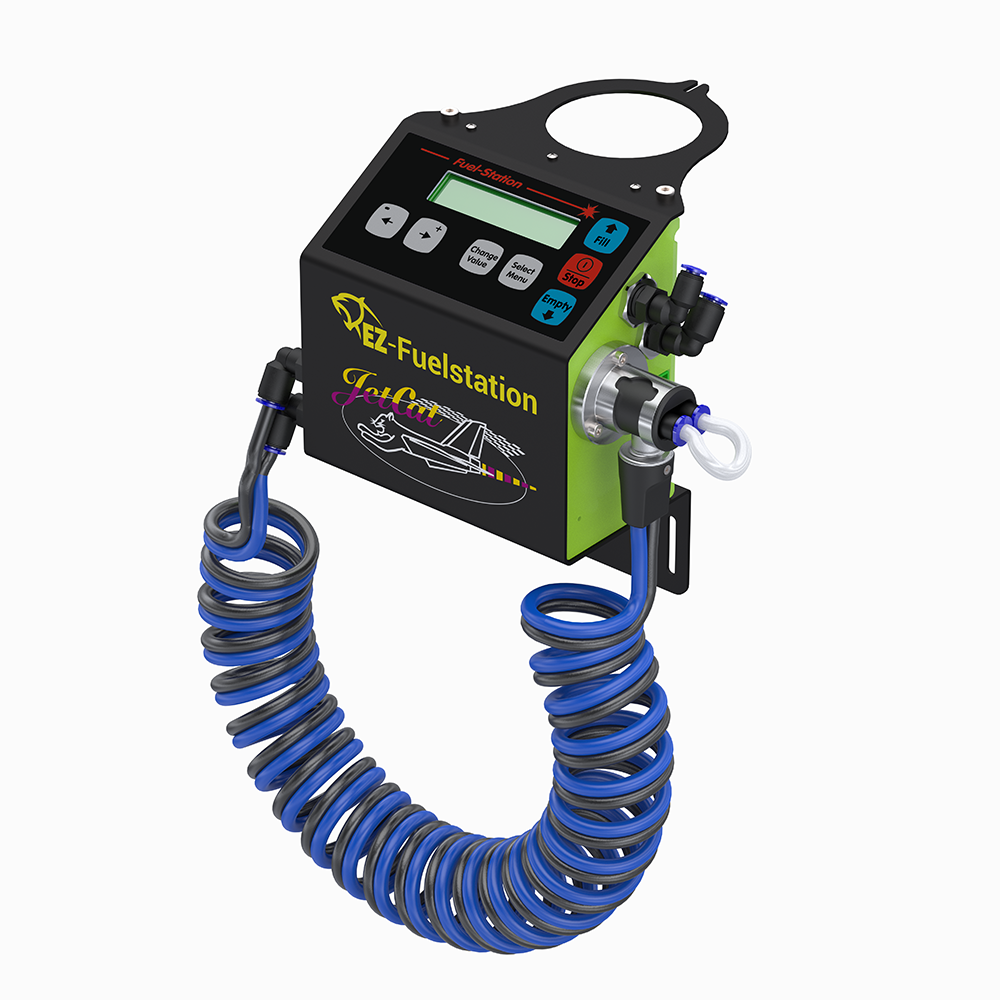
A turbine fuel system should be planned as one connected system. The tank, filling station, couplings, hoses and operating routine all affect cleanliness, repeatability and the chance of introducing air or contamination. Orkes carries the main components in the Fuel Systems & Refuelling range.
Map the fuel path before choosing components
Begin at the storage container and follow the complete path to the aircraft tank and engine. Record the required hose sizes, connector types, routing length and the position of filters, vents and shut-off points. A simple drawing often reveals unnecessary joints, tight bends or parts that cannot be reached once the airframe is assembled.
| Component | Purpose in the system | Live Orkes option |
|---|---|---|
| Filling station | Moves fuel in a controlled and repeatable way | EZ-FUELSTATION (Single) |
| Aircraft filling valve | Creates a dedicated connection point without dismantling the fuel line | EZ-Fueler Fuel |
| Parking and return interface | Provides an organised connection point for the filling system | FuelDock |
| Matching coupling | Connects the filling hose to the selected system | Filling coupling Fuel |
| Fuel container | Stores fuel in the correct container format | DN61 or DN71 |
Keep fuel and smoke circuits clearly separated
JetCat supplies dedicated fuel and smoke versions of several fittings. Treat them as separate circuits and label both ends of every hose. The visual similarity of components is not a reason to interchange them. Confirm material compatibility with the liquid being used and follow the current engine and fuel-system manuals.
Design for a repeatable refuelling routine
The JetCat FuelDock documentation describes automatic filling and emptying functions, flow measurement and tank-full detection when used in the intended system. Those features are most useful when the installation is consistent: the same connections, open vent path, correctly configured model memory and a visual inspection before every operation.
Protect open connectors from dirt, inspect hoses for hardening or damage and avoid routing that can be pinched when access panels are installed. After maintenance, test the fuel path with the aircraft secured and follow the engine manufacturer’s priming and leak-check instructions. If the required tank type, coupling or hose layout is unclear, contact Orkes with photographs and the engine model so the parts can be checked together.